Building a High-Protein Vegetarian Diet (With Eggs)
How much protein do you actually need, and how eggs fit into a vegetarian diet that hits 100g+ per day — with a sample day of eating.
8 min read · Updated November 4, 2026
How much protein do you need?
The RDA of 0.8g per kg of body weight is a floor, not a target — it prevents deficiency rather than optimizing health. If you train with weights, research supports 1.6-2.2g per kg for muscle growth. For an 70kg person, that is 112-154g daily.
Where eggs fit
Eggs are the highest-quality protein available to vegetarians at the lowest cost — roughly 6g of complete protein per egg at a few cents each. Three eggs at breakfast plus two at dinner contribute 30g of complete protein before you count anything else.
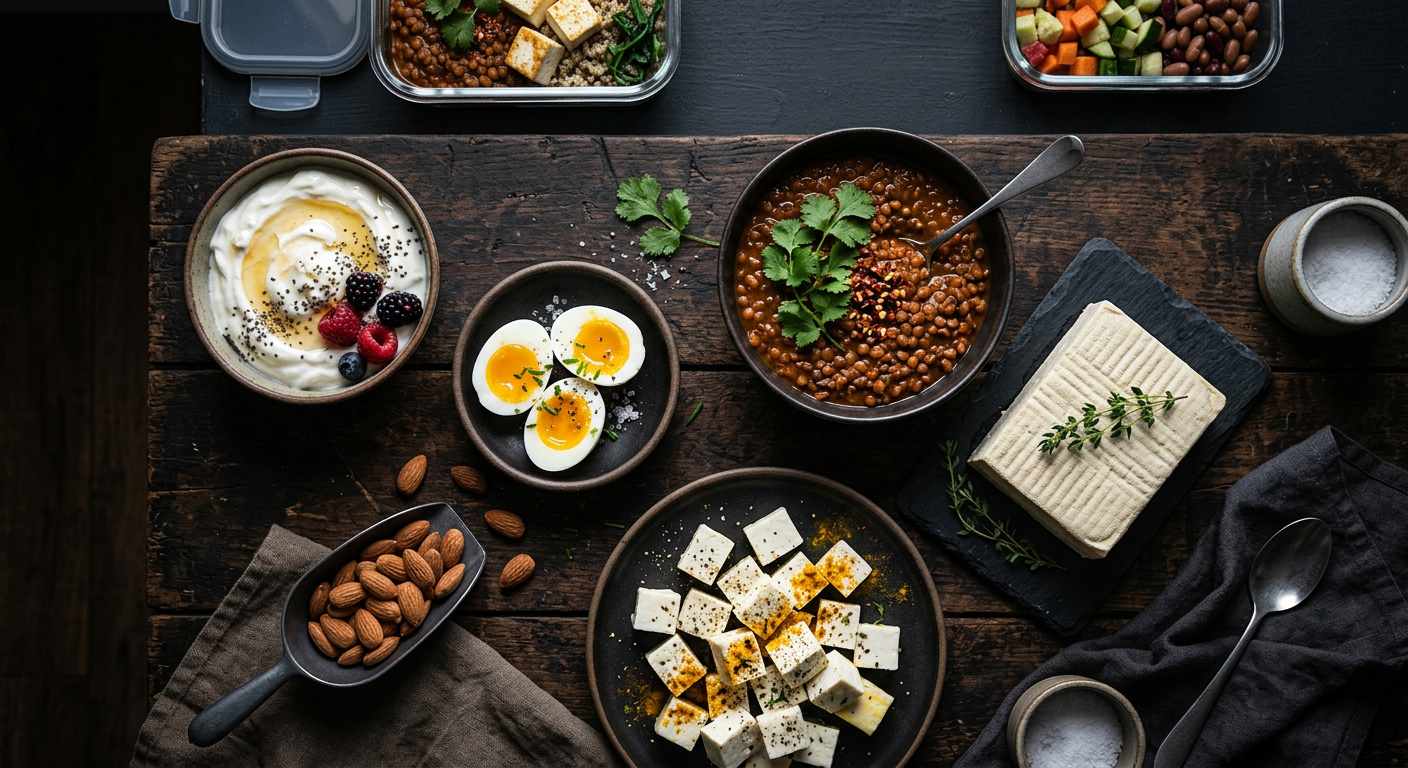
Pair eggs with lentils, paneer, Greek yogurt, tofu and whey to cover the full day. Eggs are also rich in leucine, the amino acid that most triggers muscle protein synthesis.
A sample 120g-protein eggetarian day
What it can look like in practice:
- Breakfast: egg white oats with a whole egg (32g)
- Lunch: egg salad sandwich with Greek yogurt (25g)
- Snack: 2 boiled eggs with chaat masala (13g)
- Dinner: egg curry with rice and dal (35g)
- Evening: paneer or yogurt bowl (15g)
Common mistakes
Relying on grains for protein (rice and roti are mostly carbs), skipping protein at breakfast, and eating protein only once a day. Distribute it across 3-4 meals of 25-40g each and your body uses it far better.
Frequently asked questions
How much protein does a vegetarian need per day?
At minimum 0.8g per kg of body weight, but 1.6-2.2g per kg is better if you strength train. For most adults that means 90-150g daily.
Are eggs enough protein for a vegetarian?
Eggs are an excellent foundation but variety is better — combine them with dal, paneer, yogurt, tofu and nuts to cover micronutrients and keep meals interesting.